


Basketball Terms and Phrases

  • Assist: A pass that directly leads to a made basket.
  • Backboard: The rectangular board behind the basket. The ball can be bounced off the backboard to score.
  • Backcourt: The half of the court that contains the opponent’s basket. It’s also the term used for the guards on a team.
  • Bank Shot: A shot where the ball is bounced off the backboard and into the basket.
  • Baseline: The boundary line behind each basket.
  • Box Out: A technique used to position oneself to get a rebound by blocking an opponent.
  • Charge: An offensive foul where the player with the ball runs into a stationary defender.
  • Crossover Dribble: A dribbling move where the player quickly changes the ball from one hand to the other to avoid a defender.
  • Double-Double: A statistic where a player records ten or more in two statistical categories (e.g., points and rebounds) in a single game.
  • Double Dribble: A violation where a player dribbles the ball, stops, and then starts dribbling again.
  • Fast Break: A quick offensive move towards the basket after a defensive rebound or steal.
  • Field Goal: Any basket scored from the floor, not including free throws.
  • Free Throw: A shot taken from the free-throw line, awarded after certain fouls.
  • Full-Court Press: A defensive strategy where the defense applies pressure on the offense across the entire court.
  • Goaltending: A violation where a player interferes with the ball on its way to the basket or while it’s on the rim.
  • Half-Court Shot: A shot taken from or near the half-court line, usually at the end of a period.
  • Jump Shot: A shot taken while jumping, usually from a distance away from the basket.
  • Layup: A close-range shot taken by laying the ball up near the basket, usually off the backboard.
  • Man-to-Man Defense: A defensive strategy where each defender is responsible for guarding one opponent.
  • Pick-and-Roll: An offensive play where a player sets a screen (pick) for a teammate handling the ball and then rolls towards the basket.
  • Rebound: When a player retrieves the ball after a missed shot attempt.
  • Screen: A legal block by an offensive player to free up a teammate for a shot or pass.
  • Shot Clock: The timer that limits how long a team can possess the ball before attempting a shot (typically 24 seconds in the NBA).
  • Three-Point Line: The arc around the basket that marks the distance from which shots are worth three points.
  • Traveling: A violation where a player takes too many steps without dribbling the ball.
  • Triple-Double: A performance where a player records ten or more in three statistical categories in a single game.
  • Turnover: When a team loses possession of the ball to the opponent.
  • Zone Defense: A defensive strategy where players guard areas of the court instead of specific opponents.

Basketball Organizations and Competitions

  • NBA (National Basketball Association): The premier professional basketball league in the United States and the most recognized in the world.
  • WNBA (Women’s National Basketball Association): The professional women’s basketball league in the United States.
  • NCAA (National Collegiate Athletic Association): The organization that governs college basketball in the United States.
  • FIBA (Fédération Internationale de Basketball): The international basketball federation that governs international competitions, including the World Cup of Basketball.
  • EuroLeague: The top professional basketball league in Europe, featuring the best teams from across the continent.
  • BCL (Basketball Champions League): A professional basketball competition for European clubs, organized by FIBA.
  • NBA G League: The NBA’s official minor league, serving as a development platform for young players.
  • NBL (National Basketball League): A professional basketball league based in Australia.
  • CBA (Chinese Basketball Association): The top professional basketball league in China.
  • ACB (Asociación de Clubs de Baloncesto): The top professional basketball league in Spain.
  • BSL (Basketball Super League): The top professional basketball league in Turkey.

International Competitions

  • FIBA Basketball World Cup: The premier international basketball competition, held every four years, where national teams from around the world compete.
  • Olympic Basketball: A competition held every four years during the Summer Olympics, featuring the world’s best national teams.
  • EuroBasket: A European championship tournament for national teams, organized by FIBA Europe.
  • AmeriCup: An international basketball competition featuring teams from the Americas, organized by FIBA.
  • AfroBasket: The African continental basketball championship, organized by FIBA Africa.
  • Asian Cup: A basketball championship tournament for national teams in Asia, organized by FIBA Asia.

Additional Terms and Concepts

  • All-Star Game: An exhibition game that features the best players from a league, typically the NBA or WNBA.
  • MVP (Most Valuable Player): An award given to the best-performing player, either for a specific game, series, or season.
  • Sixth Man: A term used to describe the first player off the bench, typically someone who contributes significantly despite not starting.
  • Rookie: A player in their first season of professional basketball.
  • Draft: The annual event where teams select eligible players to join the league, primarily from college basketball or international leagues.
  • Free Agency: A period when players who are not under contract with a team can be signed by any team.
  • Salary Cap: A limit on the total amount of money that a team can spend on player salaries.
  • 3-and-D Player: A player who specializes in three-point shooting and defense.
  • Heat Check: When a player who is “on fire” takes a difficult shot to test how “hot” they are.

Random Articles & Posts

The NBA Finals are played in a best-of-seven format, featuring the champions of the Eastern and Western Conferences. The first team to win four games claims the title.

Basketball in Slovenia: news, leagues, players, and development. Explore how the sport is expanding across the nation.

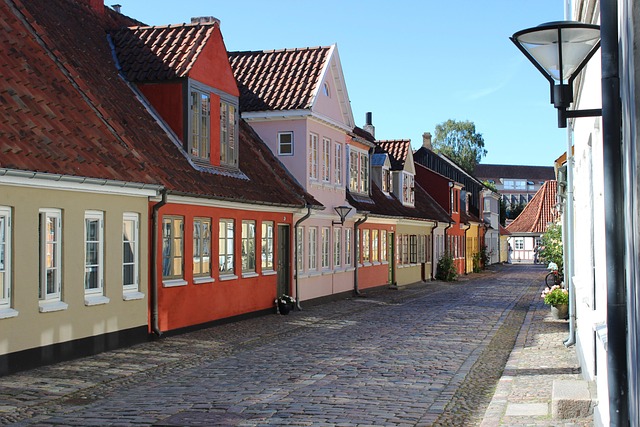
When we think of Denmark, our minds might gravitate towards its scenic coastlines, cycling culture, and tradition of design and innovation. Yet beyond its architectural beauty and sporting passion for football and handball, Denmark has quietly developed a competitive and steadily growing basketball scene. From the courts of Copenhagen to rising talent on the international stage, the story of basketball in Denmark reflects both discipline and growing ambition.

Early Growth: The Origins of Basketball in Denmark

Basketball was introduced to Denmark in the early 20th century, largely through American cultural influence and postwar exposure to international sports. The game first took hold in Copenhagen and Aarhus, where schools and community centers began promoting basketball as part of physical education. By the 1950s, the sport had gained enough popularity to warrant national organization and formal competition.

The Danish Basketball Federation (Danmarks Basketball Forbund, DBBF) was founded in 1947, marking the start of a structured era for the sport. Denmark joined FIBA the same year, allowing the country to participate in continental and international competitions. Over the following decades, basketball established a solid presence, even as it competed for attention with more dominant national sports.

Challenges and Progress: The Modern Era of Danish Basketball

Basketball’s evolution in Denmark has faced challenges common to smaller basketball nations, including limited funding and media exposure. However, persistent grassroots development and strategic investments have elevated the sport’s standing. The top-tier domestic league, Basketligaen, founded in 1993, became a major catalyst for growth by providing local players with consistent competition and visibility.

Clubs such as the Bakken Bears (Aarhus) and the Svendborg Rabbits have become synonymous with Danish basketball excellence. The Bakken Bears, in particular, have represented Denmark successfully in European competitions, raising the country’s profile within international basketball. Their sustained success has inspired young athletes and drawn attention to the increasing professionalism within the league.

Basketball in Denmark Today: Culture, Talent, and Expansion

Today, basketball in Denmark enjoys its strongest period of growth yet. Youth participation is at an all-time high, supported by a network of clubs, training programs, and community initiatives. The influence of global basketball—through the NBA, EuroLeague, and social media—has fueled enthusiasm among younger generations. Urban courts in Copenhagen, Odense, and Aalborg have become spaces of cultural exchange and athletic expression.

The national team, known simply as “Team Denmark,” continues to compete in FIBA Europe competitions and has made impressive progress in recent years. Danish players such as Gabriel “Iffe” Lundberg, who became the first Dane to play in the NBA, have further boosted national interest and pride. Their success abroad demonstrates the growing potential of Danish basketball on the world stage.

Beyond the Court: The Role of Basketball in Danish Society

Beyond its athletic impact, basketball in Denmark represents creativity, inclusion, and community. The sport’s appeal extends beyond traditional club structures, drawing participants from diverse backgrounds and fostering unity through shared passion. Local tournaments, streetball events, and youth leagues all contribute to a vibrant basketball culture rooted in teamwork and respect.

Basketball has also become a platform for cross-cultural engagement, reflecting Denmark’s openness to global influences. The sport’s fast-paced, collaborative nature aligns well with the country’s values of equality and collective achievement, reinforcing its growing place within Danish society.

Conclusion: Denmark Basketball Outlook

Basketball in Denmark is a story of consistent growth, perseverance, and aspiration. From its early introduction after World War II to the thriving Basketligaen and international achievements of today, the sport has carved out a meaningful space in the nation’s athletic identity. With strong youth development, increased visibility, and emerging international stars, Danish basketball stands on the verge of a breakthrough. The game’s evolution mirrors the nation itself—innovative, determined, and forward-looking—a reflection of Denmark’s enduring love for sport and competition.