Basketball Terms and Phrases

  • Assist: A pass that directly leads to a made basket.
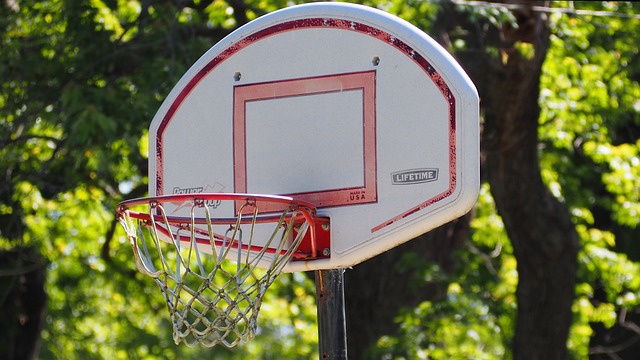
  • Backboard: The rectangular board behind the basket. The ball can be bounced off the backboard to score.
  • Backcourt: The half of the court that contains the opponent’s basket. It’s also the term used for the guards on a team.
  • Bank Shot: A shot where the ball is bounced off the backboard and into the basket.
  • Baseline: The boundary line behind each basket.
  • Box Out: A technique used to position oneself to get a rebound by blocking an opponent.
  • Charge: An offensive foul where the player with the ball runs into a stationary defender.
  • Crossover Dribble: A dribbling move where the player quickly changes the ball from one hand to the other to avoid a defender.
  • Double-Double: A statistic where a player records ten or more in two statistical categories (e.g., points and rebounds) in a single game.
  • Double Dribble: A violation where a player dribbles the ball, stops, and then starts dribbling again.
  • Fast Break: A quick offensive move towards the basket after a defensive rebound or steal.
  • Field Goal: Any basket scored from the floor, not including free throws.
  • Free Throw: A shot taken from the free-throw line, awarded after certain fouls.
  • Full-Court Press: A defensive strategy where the defense applies pressure on the offense across the entire court.
  • Goaltending: A violation where a player interferes with the ball on its way to the basket or while it’s on the rim.
  • Half-Court Shot: A shot taken from or near the half-court line, usually at the end of a period.
  • Jump Shot: A shot taken while jumping, usually from a distance away from the basket.
  • Layup: A close-range shot taken by laying the ball up near the basket, usually off the backboard.
  • Man-to-Man Defense: A defensive strategy where each defender is responsible for guarding one opponent.
  • Pick-and-Roll: An offensive play where a player sets a screen (pick) for a teammate handling the ball and then rolls towards the basket.
  • Rebound: When a player retrieves the ball after a missed shot attempt.
  • Screen: A legal block by an offensive player to free up a teammate for a shot or pass.
  • Shot Clock: The timer that limits how long a team can possess the ball before attempting a shot (typically 24 seconds in the NBA).
  • Three-Point Line: The arc around the basket that marks the distance from which shots are worth three points.
  • Traveling: A violation where a player takes too many steps without dribbling the ball.
  • Triple-Double: A performance where a player records ten or more in three statistical categories in a single game.
  • Turnover: When a team loses possession of the ball to the opponent.
  • Zone Defense: A defensive strategy where players guard areas of the court instead of specific opponents.

Basketball Organizations and Competitions

  • NBA (National Basketball Association): The premier professional basketball league in the United States and the most recognized in the world.
  • WNBA (Women’s National Basketball Association): The professional women’s basketball league in the United States.
  • NCAA (National Collegiate Athletic Association): The organization that governs college basketball in the United States.
  • FIBA (Fédération Internationale de Basketball): The international basketball federation that governs international competitions, including the World Cup of Basketball.
  • EuroLeague: The top professional basketball league in Europe, featuring the best teams from across the continent.
  • BCL (Basketball Champions League): A professional basketball competition for European clubs, organized by FIBA.
  • NBA G League: The NBA’s official minor league, serving as a development platform for young players.
  • NBL (National Basketball League): A professional basketball league based in Australia.
  • CBA (Chinese Basketball Association): The top professional basketball league in China.
  • ACB (Asociación de Clubs de Baloncesto): The top professional basketball league in Spain.
  • BSL (Basketball Super League): The top professional basketball league in Turkey.

International Competitions

  • FIBA Basketball World Cup: The premier international basketball competition, held every four years, where national teams from around the world compete.
  • Olympic Basketball: A competition held every four years during the Summer Olympics, featuring the world’s best national teams.
  • EuroBasket: A European championship tournament for national teams, organized by FIBA Europe.
  • AmeriCup: An international basketball competition featuring teams from the Americas, organized by FIBA.
  • AfroBasket: The African continental basketball championship, organized by FIBA Africa.
  • Asian Cup: A basketball championship tournament for national teams in Asia, organized by FIBA Asia.

Additional Terms and Concepts

  • All-Star Game: An exhibition game that features the best players from a league, typically the NBA or WNBA.
  • MVP (Most Valuable Player): An award given to the best-performing player, either for a specific game, series, or season.
  • Sixth Man: A term used to describe the first player off the bench, typically someone who contributes significantly despite not starting.
  • Rookie: A player in their first season of professional basketball.
  • Draft: The annual event where teams select eligible players to join the league, primarily from college basketball or international leagues.
  • Free Agency: A period when players who are not under contract with a team can be signed by any team.
  • Salary Cap: A limit on the total amount of money that a team can spend on player salaries.
  • 3-and-D Player: A player who specializes in three-point shooting and defense.
  • Heat Check: When a player who is “on fire” takes a difficult shot to test how “hot” they are.

Random Articles & Posts

The 1972 Summer Olympics in Munich are forever etched in basketball history, not just for…

Unrivaled is a professional women’s 3-on-3 basketball league in the U.S., co-founded by WNBA stars Breanna Stewart and Napheesa Collier to provide a compelling domestic alternative for players during the WNBA offseason.

Basketball in Spain: news, leagues, players, and development. Explore how the sport is expanding across the nation.

The NBA began in the late 1940s as a small league struggling for attention, eventually uniting rival organizations to create the foundation of modern professional basketball.

UMass and Calipari in the 90s became one of college basketball’s most important rise stories because it showed how quickly a program could change its national identity. Before John Calipari, Massachusetts basketball was not treated like a destination for future pros or national-title contenders. By the middle of the decade, UMass had become a top-ranked program, Marcus Camby had become one of the most important players in the country, and Calipari had become one of basketball’s most visible young coaches. The story matters beyond Amherst because it previewed a modern basketball formula: recruiting ambition, coach branding, NBA dreams, television visibility, and a program built to look bigger than its history.

How UMass and Calipari in the 90s Built a National Stage

When John Calipari took over UMass in 1988, the program was not positioned like a national power. It did not have the built-in advantages of the sport’s traditional blue bloods, and it did not carry the national profile of programs such as Duke, Kentucky, North Carolina, Kansas, or Indiana. That was part of what made the rise so striking. UMass did not simply improve. It changed categories.

Calipari’s early success came through energy, recruiting, defensive identity, and the ability to make the program feel urgent. The Minutemen became increasingly difficult to dismiss, winning in the Atlantic 10 and pushing into the national conversation. By the early 1990s, UMass was no longer just a good regional story. It was a program that could appear in national rankings, play major opponents, and carry itself like it belonged on the biggest stage.

That shift mattered because college basketball was entering a more television-driven era. March success, national scheduling, charismatic coaches, and recognizable stars could change a program’s reputation quickly. Calipari understood that a team outside the sport’s traditional aristocracy needed more than wins. It needed identity. UMass developed one around pressure, confidence, and the sense that it was not waiting for permission to matter.

The program’s rise also gave Calipari the foundation for the coaching image that would follow him throughout his career. He became associated with big recruiting swings, player belief, motivational force, and the ability to sell a basketball vision. At UMass, that vision turned a once-modest program into a team opponents had to treat seriously.

Marcus Camby Turned the UMass Rise Into a Pro Basketball Story

The defining figure of the UMass peak was Marcus Camby. His presence changed the ceiling of the program. Camby was not simply a productive college big man; he was a future NBA lottery pick whose length, shot-blocking, mobility, and defensive instincts made UMass feel like a team with professional-level talent at its center.

With Camby, the Minutemen became a national title threat. The 1995-96 team reached No. 1 in the country and advanced to the Final Four, giving UMass the kind of season that permanently changed how the program was remembered. Camby gave the team a star who could anchor the defense, finish plays, and tilt matchups against opponents that were used to having the talent advantage themselves.

That is where the pro basketball connection becomes central. UMass in the 90s was not just a college underdog story. It was a preview of how future college coaches would build their public identities around the promise of professional development. Camby became the proof point. He entered the NBA as the No. 2 pick in the 1996 draft, turning UMass into part of the league’s talent pipeline and giving Calipari a player-development credential that would follow him into later jobs.

The Final Four run was later vacated because of issues involving Camby’s dealings with agents, which remains part of the historical record. But the basketball impact of that era did not disappear. The image of UMass as a national power, Camby as a dominant college star, and Calipari as a coach capable of raising a program’s ceiling stayed attached to the story. The official record changed. The memory of what that team represented did not.

Why Calipari’s UMass Years Still Matter

Calipari’s later career made the UMass years look even more important. His time with the New Jersey Nets, his run at Memphis, and his championship-era success at Kentucky all carried traces of the same larger idea: a coach could become the organizing force of an entire basketball ecosystem. He could recruit elite talent, shape a program’s image, sell a path to the NBA, and make the team feel connected to the next level.

That model became especially clear at Kentucky, where Calipari built one of the defining player-to-pro pipelines of the modern era. But the early version was visible at UMass. He had already shown that a program’s perceived limits could be challenged if the coach could recruit, motivate, market, and win at the same time.

For pro basketball fans, UMass in the 90s matters because it sits near the beginning of a major shift in how college success and NBA ambition became intertwined. Camby’s rise gave the program a direct NBA connection. Calipari’s rise gave the sport a coaching figure who would later become one of the most important architects of the college-to-pro pathway.

UMass and Calipari in the 90s remains a story about transformation. A regional program became a national contender, a young coach became a national figure, and a future NBA player helped make Amherst part of basketball’s larger map. The era ended with complications, but its influence lasted because it showed how modern basketball power could be built quickly, boldly, and around the promise of the next level.