


Basketball Terms and Phrases

  • Assist: A pass that directly leads to a made basket.
  • Backboard: The rectangular board behind the basket. The ball can be bounced off the backboard to score.
  • Backcourt: The half of the court that contains the opponent’s basket. It’s also the term used for the guards on a team.
  • Bank Shot: A shot where the ball is bounced off the backboard and into the basket.
  • Baseline: The boundary line behind each basket.
  • Box Out: A technique used to position oneself to get a rebound by blocking an opponent.
  • Charge: An offensive foul where the player with the ball runs into a stationary defender.
  • Crossover Dribble: A dribbling move where the player quickly changes the ball from one hand to the other to avoid a defender.
  • Double-Double: A statistic where a player records ten or more in two statistical categories (e.g., points and rebounds) in a single game.
  • Double Dribble: A violation where a player dribbles the ball, stops, and then starts dribbling again.
  • Fast Break: A quick offensive move towards the basket after a defensive rebound or steal.
  • Field Goal: Any basket scored from the floor, not including free throws.
  • Free Throw: A shot taken from the free-throw line, awarded after certain fouls.
  • Full-Court Press: A defensive strategy where the defense applies pressure on the offense across the entire court.
  • Goaltending: A violation where a player interferes with the ball on its way to the basket or while it’s on the rim.
  • Half-Court Shot: A shot taken from or near the half-court line, usually at the end of a period.
  • Jump Shot: A shot taken while jumping, usually from a distance away from the basket.
  • Layup: A close-range shot taken by laying the ball up near the basket, usually off the backboard.
  • Man-to-Man Defense: A defensive strategy where each defender is responsible for guarding one opponent.
  • Pick-and-Roll: An offensive play where a player sets a screen (pick) for a teammate handling the ball and then rolls towards the basket.
  • Rebound: When a player retrieves the ball after a missed shot attempt.
  • Screen: A legal block by an offensive player to free up a teammate for a shot or pass.
  • Shot Clock: The timer that limits how long a team can possess the ball before attempting a shot (typically 24 seconds in the NBA).
  • Three-Point Line: The arc around the basket that marks the distance from which shots are worth three points.
  • Traveling: A violation where a player takes too many steps without dribbling the ball.
  • Triple-Double: A performance where a player records ten or more in three statistical categories in a single game.
  • Turnover: When a team loses possession of the ball to the opponent.
  • Zone Defense: A defensive strategy where players guard areas of the court instead of specific opponents.

Basketball Organizations and Competitions

  • NBA (National Basketball Association): The premier professional basketball league in the United States and the most recognized in the world.
  • WNBA (Women’s National Basketball Association): The professional women’s basketball league in the United States.
  • NCAA (National Collegiate Athletic Association): The organization that governs college basketball in the United States.
  • FIBA (Fédération Internationale de Basketball): The international basketball federation that governs international competitions, including the World Cup of Basketball.
  • EuroLeague: The top professional basketball league in Europe, featuring the best teams from across the continent.
  • BCL (Basketball Champions League): A professional basketball competition for European clubs, organized by FIBA.
  • NBA G League: The NBA’s official minor league, serving as a development platform for young players.
  • NBL (National Basketball League): A professional basketball league based in Australia.
  • CBA (Chinese Basketball Association): The top professional basketball league in China.
  • ACB (Asociación de Clubs de Baloncesto): The top professional basketball league in Spain.
  • BSL (Basketball Super League): The top professional basketball league in Turkey.

International Competitions

  • FIBA Basketball World Cup: The premier international basketball competition, held every four years, where national teams from around the world compete.
  • Olympic Basketball: A competition held every four years during the Summer Olympics, featuring the world’s best national teams.
  • EuroBasket: A European championship tournament for national teams, organized by FIBA Europe.
  • AmeriCup: An international basketball competition featuring teams from the Americas, organized by FIBA.
  • AfroBasket: The African continental basketball championship, organized by FIBA Africa.
  • Asian Cup: A basketball championship tournament for national teams in Asia, organized by FIBA Asia.

Additional Terms and Concepts

  • All-Star Game: An exhibition game that features the best players from a league, typically the NBA or WNBA.
  • MVP (Most Valuable Player): An award given to the best-performing player, either for a specific game, series, or season.
  • Sixth Man: A term used to describe the first player off the bench, typically someone who contributes significantly despite not starting.
  • Rookie: A player in their first season of professional basketball.
  • Draft: The annual event where teams select eligible players to join the league, primarily from college basketball or international leagues.
  • Free Agency: A period when players who are not under contract with a team can be signed by any team.
  • Salary Cap: A limit on the total amount of money that a team can spend on player salaries.
  • 3-and-D Player: A player who specializes in three-point shooting and defense.
  • Heat Check: When a player who is “on fire” takes a difficult shot to test how “hot” they are.

Random Articles & Posts

European basketball faces challenges with financial disparities and visibility, but its deep talent pool and global influence offer massive potential for growth.

In their first season in Mexico’s top league, the Capitanes exceeded expectations — reaching the finals and reigniting national interest in professional basketball.

The WNBA Draft is the gateway to professional basketball for top college and international talent. Here’s how the three-round format and lottery system shape the league’s balance and future.

Basketball in Lithuania matters because the sport became more than a game in a country of fewer than three million people. It became a marker of identity, a source of international recognition, and one of the clearest ways Lithuania announced itself on the world stage after decades under Soviet control. Lithuanian basketball history runs through pre-war European titles, Soviet-era stars, Žalgiris Kaunas, Arvydas Sabonis, Šarūnas Marčiulionis, and the unforgettable 1992 Olympic bronze medal team. The result is one of basketball’s most distinctive national stories: a small country that made the sport feel central to its cultural life and produced an influence far larger than its population.

Before Independence, Lithuanian Basketball Already Had Deep Roots

Lithuania’s basketball identity did not begin in 1992, even if that Olympic team became the country’s most famous global basketball symbol. The roots go much deeper. Lithuania won EuroBasket titles in 1937 and 1939, establishing itself as one of Europe’s early basketball powers before World War II reshaped the continent.

After Lithuania was absorbed into the Soviet Union, Lithuanian players continued to carry enormous basketball importance, though often under a Soviet flag rather than their own. That created one of the defining tensions in Lithuanian basketball history. The talent was Lithuanian, the international results were often credited to the Soviet Union, and the sport became tied to a larger question of national identity.

Žalgiris Kaunas became central to that identity. Its games against CSKA Moscow carried meaning beyond the standings. CSKA represented the Soviet sports establishment, while Žalgiris became a Lithuanian club with emotional weight far beyond club basketball. When Žalgiris won, it was not simply a domestic or Soviet league result. For many Lithuanian fans, it felt like a public expression of pride inside a system that limited national independence.

That background helps explain why basketball in Lithuania became so powerful. The sport gave Lithuanian players a stage, Lithuanian fans a shared language, and the country a way to preserve distinction even when political independence had been taken away.

The 1992 Olympic Team Turned Basketball in Lithuania Into a Global Story

The 1992 Olympics made basketball in Lithuania visible to the world in a new way. Lithuania had restored independence in 1990, and Barcelona became the country’s first Summer Olympics after that restoration. Its men’s basketball team arrived with a roster led by stars such as Arvydas Sabonis and Šarūnas Marčiulionis, players who already represented elite basketball achievement but now had the chance to play for Lithuania itself.

The bronze medal game gave the story its perfect emotional shape. Lithuania faced the Unified Team, which represented former Soviet republics after the collapse of the Soviet Union. For Lithuania, the matchup carried obvious symbolic force. This was not only a chance to win an Olympic medal. It was a chance to stand across from the remnants of the system that had previously claimed Lithuanian players as its own.

Lithuania won 82–78. Marčiulionis scored 29 points, and Sabonis added 27. The win gave Lithuania a bronze medal, but the meaning was larger than the medal table. It gave the country a global basketball image at the exact moment it was reintroducing itself politically and culturally.

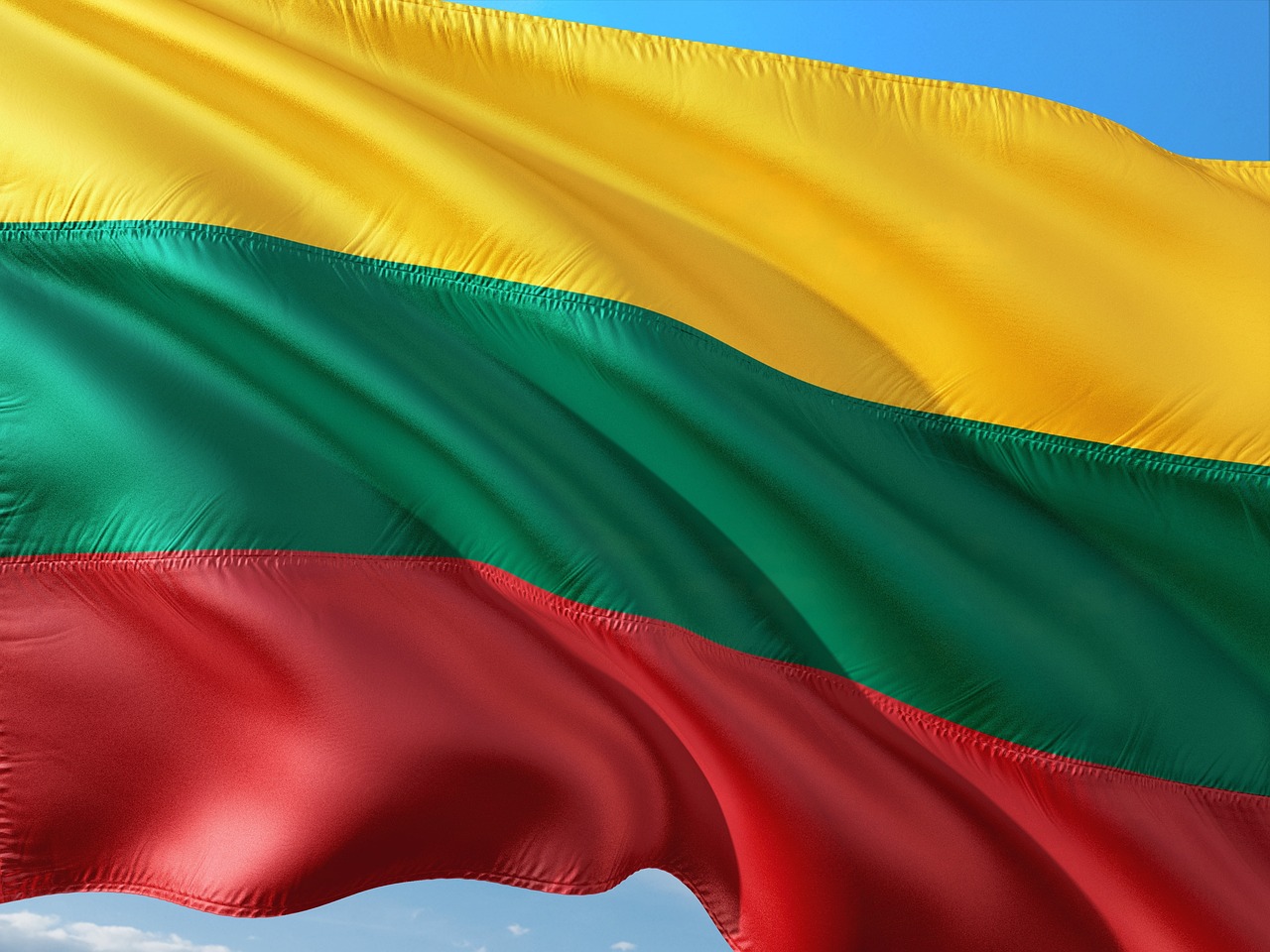
The visual identity of that team also became part of the story. The tie-dye warmups associated with the Grateful Dead connection helped turn the team into an international curiosity, but the lasting power of the moment came from what the players represented. They were not a novelty. They were a serious basketball team carrying a new national flag into one of the sport’s biggest stages.

Lithuania followed that 1992 bronze with Olympic bronze medals again in 1996 and 2000. That consistency proved the Barcelona moment was not a one-time emotional surge. It was the beginning of modern Lithuania’s reputation as one of international basketball’s most respected small-country powers.

Lithuania’s Basketball Legacy Reaches Far Beyond Its Size

The legacy of basketball in Lithuania is built on the gap between population and influence. Few countries of Lithuania’s size have produced such a lasting basketball identity. The national team has remained a major presence in European and global competition, winning EuroBasket again in 2003 and continuing to produce players, coaches, and club teams with international credibility.

Lithuanian stars also helped shape the NBA’s broader global story. Sabonis became one of the great international what-if figures: a brilliant center whose full prime was largely spent outside the NBA before he joined the Portland Trail Blazers. Marčiulionis became an important early European presence in the NBA and helped normalize the idea that international guards could bring physicality, creativity, and high-level scoring to the league.

Later Lithuanian players carried that tradition forward. Šarūnas Jasikevičius became a major figure in European basketball and later coaching. Žydrūnas Ilgauskas built a long NBA career with Cleveland. Jonas Valančiūnas became one of the most recognizable modern Lithuanian big men. Domantas Sabonis, the son of Arvydas Sabonis, extended the family’s basketball legacy into a new NBA generation.

The country’s club culture remains just as important. Žalgiris Kaunas is not simply a team with a long history; it is one of the institutions that keeps Lithuanian basketball connected to everyday national identity. Its role in European competition gives Lithuania a year-round basketball presence beyond national-team tournaments.

Basketball in Lithuania still matters because it shows how a sport can carry memory, pride, and global recognition for a small country. The 1992 Olympic bronze medal gave the world the most famous image, but the deeper story is broader: Lithuania built a basketball culture strong enough to survive political upheaval, produce world-class players, and remain one of the sport’s most meaningful national identities.