Basketball Terms and Phrases

  • Assist: A pass that directly leads to a made basket.
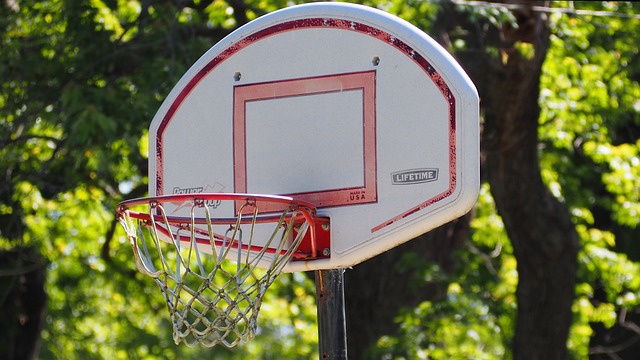
  • Backboard: The rectangular board behind the basket. The ball can be bounced off the backboard to score.
  • Backcourt: The half of the court that contains the opponent’s basket. It’s also the term used for the guards on a team.
  • Bank Shot: A shot where the ball is bounced off the backboard and into the basket.
  • Baseline: The boundary line behind each basket.
  • Box Out: A technique used to position oneself to get a rebound by blocking an opponent.
  • Charge: An offensive foul where the player with the ball runs into a stationary defender.
  • Crossover Dribble: A dribbling move where the player quickly changes the ball from one hand to the other to avoid a defender.
  • Double-Double: A statistic where a player records ten or more in two statistical categories (e.g., points and rebounds) in a single game.
  • Double Dribble: A violation where a player dribbles the ball, stops, and then starts dribbling again.
  • Fast Break: A quick offensive move towards the basket after a defensive rebound or steal.
  • Field Goal: Any basket scored from the floor, not including free throws.
  • Free Throw: A shot taken from the free-throw line, awarded after certain fouls.
  • Full-Court Press: A defensive strategy where the defense applies pressure on the offense across the entire court.
  • Goaltending: A violation where a player interferes with the ball on its way to the basket or while it’s on the rim.
  • Half-Court Shot: A shot taken from or near the half-court line, usually at the end of a period.
  • Jump Shot: A shot taken while jumping, usually from a distance away from the basket.
  • Layup: A close-range shot taken by laying the ball up near the basket, usually off the backboard.
  • Man-to-Man Defense: A defensive strategy where each defender is responsible for guarding one opponent.
  • Pick-and-Roll: An offensive play where a player sets a screen (pick) for a teammate handling the ball and then rolls towards the basket.
  • Rebound: When a player retrieves the ball after a missed shot attempt.
  • Screen: A legal block by an offensive player to free up a teammate for a shot or pass.
  • Shot Clock: The timer that limits how long a team can possess the ball before attempting a shot (typically 24 seconds in the NBA).
  • Three-Point Line: The arc around the basket that marks the distance from which shots are worth three points.
  • Traveling: A violation where a player takes too many steps without dribbling the ball.
  • Triple-Double: A performance where a player records ten or more in three statistical categories in a single game.
  • Turnover: When a team loses possession of the ball to the opponent.
  • Zone Defense: A defensive strategy where players guard areas of the court instead of specific opponents.

Basketball Organizations and Competitions

  • NBA (National Basketball Association): The premier professional basketball league in the United States and the most recognized in the world.
  • WNBA (Women’s National Basketball Association): The professional women’s basketball league in the United States.
  • NCAA (National Collegiate Athletic Association): The organization that governs college basketball in the United States.
  • FIBA (Fédération Internationale de Basketball): The international basketball federation that governs international competitions, including the World Cup of Basketball.
  • EuroLeague: The top professional basketball league in Europe, featuring the best teams from across the continent.
  • BCL (Basketball Champions League): A professional basketball competition for European clubs, organized by FIBA.
  • NBA G League: The NBA’s official minor league, serving as a development platform for young players.
  • NBL (National Basketball League): A professional basketball league based in Australia.
  • CBA (Chinese Basketball Association): The top professional basketball league in China.
  • ACB (Asociación de Clubs de Baloncesto): The top professional basketball league in Spain.
  • BSL (Basketball Super League): The top professional basketball league in Turkey.

International Competitions

  • FIBA Basketball World Cup: The premier international basketball competition, held every four years, where national teams from around the world compete.
  • Olympic Basketball: A competition held every four years during the Summer Olympics, featuring the world’s best national teams.
  • EuroBasket: A European championship tournament for national teams, organized by FIBA Europe.
  • AmeriCup: An international basketball competition featuring teams from the Americas, organized by FIBA.
  • AfroBasket: The African continental basketball championship, organized by FIBA Africa.
  • Asian Cup: A basketball championship tournament for national teams in Asia, organized by FIBA Asia.

Additional Terms and Concepts

  • All-Star Game: An exhibition game that features the best players from a league, typically the NBA or WNBA.
  • MVP (Most Valuable Player): An award given to the best-performing player, either for a specific game, series, or season.
  • Sixth Man: A term used to describe the first player off the bench, typically someone who contributes significantly despite not starting.
  • Rookie: A player in their first season of professional basketball.
  • Draft: The annual event where teams select eligible players to join the league, primarily from college basketball or international leagues.
  • Free Agency: A period when players who are not under contract with a team can be signed by any team.
  • Salary Cap: A limit on the total amount of money that a team can spend on player salaries.
  • 3-and-D Player: A player who specializes in three-point shooting and defense.
  • Heat Check: When a player who is “on fire” takes a difficult shot to test how “hot” they are.

Random Articles & Posts

Basketball in the Kosovo: news, leagues, players, and development. Explore how the sport is expanding across the nation.

Basketball in the Bulgaria: news, leagues, players, and development. Explore how the sport is expanding across the nation.

The 2012 Summer Olympics in London brought together the world’s best basketball talent for another…

Warriors 73–9 and losing the Finals became one of the defining contradictions in NBA history. The 2015–16 Golden State Warriors produced the greatest regular-season record the league had ever seen, surpassing the 1995–96 Chicago Bulls and turning Stephen Curry’s shooting revolution into a nightly national event. Yet the season is remembered through two lenses at once: unmatched dominance across 82 games and a blown 3–1 lead against the Cleveland Cavaliers in the NBA Finals. That tension is what makes the story matter. Golden State changed modern basketball, but Cleveland changed how that season would be remembered.

A Record Built on Pace, Spacing, and Stephen Curry’s Prime

The Warriors did not reach 73 wins by accident or by simply extending their 2015 championship form. They pushed the NBA into a new tactical era. Their offense stretched defenses far beyond the three-point line, used Draymond Green as a passing hub, and turned Curry and Klay Thompson into constant off-ball threats. Opponents could defend one action correctly and still give up a clean look because Golden State’s spacing forced decisions faster than most teams could process them.

Curry’s 2015–16 season became the centerpiece. He averaged more than 30 points per game, made 402 three-pointers, and became the NBA’s first unanimous MVP. His range changed the geometry of possession. A shot that once looked rushed or excessive became part of an elite offense’s normal rhythm. The Warriors were not just winning; they were changing what teams considered a good shot.

Their record chase added another layer. As the wins piled up, the season became a nightly comparison to the 1995–96 Bulls. Golden State was no longer only defending a championship. The team was chasing a number that carried historical weight, and every game became part of a larger argument about regular-season greatness.

How Warriors 73–9 and Losing the Finals Became One Story

The 2016 playoffs turned the Warriors’ greatest strength into a source of pressure. Golden State survived a major scare in the Western Conference Finals, coming back from a 3–1 deficit against the Oklahoma City Thunder. That comeback preserved the dream season, but it also exposed the difficulty of carrying a historic regular season into June. By the time the Warriors reached the Finals, they were no longer just trying to win another title. They were trying to complete a season that had become larger than the team itself.

The Finals against Cleveland began in Golden State’s favor. The Warriors led the series 3–1 and seemed close to finishing the greatest full season in NBA history. Then the series shifted. LeBron James and Kyrie Irving each scored 41 points in Game 5. Cleveland won Game 6 behind another dominant James performance. By Game 7, the series had become a test of nerve, execution, fatigue, and legacy.

The final minutes produced three lasting images: LeBron’s chase-down block on Andre Iguodala, Irving’s three-pointer over Curry, and Golden State’s inability to find one final answer at home. Cleveland won 93–89, giving the Cavaliers their first NBA championship and ending the Warriors’ record season one victory short of completion.

That ending changed the meaning of 73–9. Instead of standing alone as the highest regular-season peak in league history, it became inseparable from the Finals loss. The record remained real. The influence remained real. But the absence of the title created the question that still follows the season: can a team have the greatest regular season ever if it does not win the championship?

The Legacy of a Season That Changed the NBA Anyway

The Warriors’ Finals loss did not erase what the team changed. If anything, the 2015–16 season accelerated the league’s transformation. Teams placed greater value on shooting, spacing, switchable defenders, small-ball lineups, and frontcourt playmakers. Curry’s range influenced youth basketball, NBA shot selection, and the way teams built offenses around movement instead of only isolation or post play.

The loss also shaped Golden State’s next chapter. The Warriors responded by adding Kevin Durant that summer, creating one of the most talented teams in NBA history. That move cannot be separated from the pain of 2016. The 73-win season proved Golden State could dominate the league, but the Finals showed that even dominance could be vulnerable under playoff pressure.

For Cleveland, the series became the defining achievement of the LeBron James era. For Golden State, it became a permanent complication. The Warriors were champions before 2016 and champions again after it, but that season remains the hinge point in their dynasty: the year they reached the highest regular-season standard ever and still had to live with the one series they could not close.

Warriors 73–9 and losing the Finals still matters because it captures the difference between dominance and completion. Golden State changed basketball across 82 games, but Cleveland claimed the season’s final word. That contrast is why 2016 remains one of the most discussed seasons in NBA history.