Basketball Terms and Phrases

  • Assist: A pass that directly leads to a made basket.
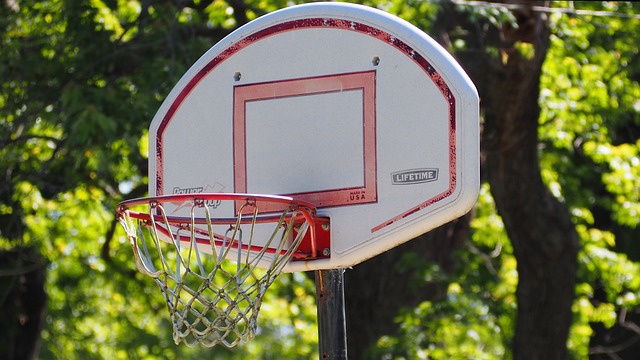
  • Backboard: The rectangular board behind the basket. The ball can be bounced off the backboard to score.
  • Backcourt: The half of the court that contains the opponent’s basket. It’s also the term used for the guards on a team.
  • Bank Shot: A shot where the ball is bounced off the backboard and into the basket.
  • Baseline: The boundary line behind each basket.
  • Box Out: A technique used to position oneself to get a rebound by blocking an opponent.
  • Charge: An offensive foul where the player with the ball runs into a stationary defender.
  • Crossover Dribble: A dribbling move where the player quickly changes the ball from one hand to the other to avoid a defender.
  • Double-Double: A statistic where a player records ten or more in two statistical categories (e.g., points and rebounds) in a single game.
  • Double Dribble: A violation where a player dribbles the ball, stops, and then starts dribbling again.
  • Fast Break: A quick offensive move towards the basket after a defensive rebound or steal.
  • Field Goal: Any basket scored from the floor, not including free throws.
  • Free Throw: A shot taken from the free-throw line, awarded after certain fouls.
  • Full-Court Press: A defensive strategy where the defense applies pressure on the offense across the entire court.
  • Goaltending: A violation where a player interferes with the ball on its way to the basket or while it’s on the rim.
  • Half-Court Shot: A shot taken from or near the half-court line, usually at the end of a period.
  • Jump Shot: A shot taken while jumping, usually from a distance away from the basket.
  • Layup: A close-range shot taken by laying the ball up near the basket, usually off the backboard.
  • Man-to-Man Defense: A defensive strategy where each defender is responsible for guarding one opponent.
  • Pick-and-Roll: An offensive play where a player sets a screen (pick) for a teammate handling the ball and then rolls towards the basket.
  • Rebound: When a player retrieves the ball after a missed shot attempt.
  • Screen: A legal block by an offensive player to free up a teammate for a shot or pass.
  • Shot Clock: The timer that limits how long a team can possess the ball before attempting a shot (typically 24 seconds in the NBA).
  • Three-Point Line: The arc around the basket that marks the distance from which shots are worth three points.
  • Traveling: A violation where a player takes too many steps without dribbling the ball.
  • Triple-Double: A performance where a player records ten or more in three statistical categories in a single game.
  • Turnover: When a team loses possession of the ball to the opponent.
  • Zone Defense: A defensive strategy where players guard areas of the court instead of specific opponents.

Basketball Organizations and Competitions

  • NBA (National Basketball Association): The premier professional basketball league in the United States and the most recognized in the world.
  • WNBA (Women’s National Basketball Association): The professional women’s basketball league in the United States.
  • NCAA (National Collegiate Athletic Association): The organization that governs college basketball in the United States.
  • FIBA (Fédération Internationale de Basketball): The international basketball federation that governs international competitions, including the World Cup of Basketball.
  • EuroLeague: The top professional basketball league in Europe, featuring the best teams from across the continent.
  • BCL (Basketball Champions League): A professional basketball competition for European clubs, organized by FIBA.
  • NBA G League: The NBA’s official minor league, serving as a development platform for young players.
  • NBL (National Basketball League): A professional basketball league based in Australia.
  • CBA (Chinese Basketball Association): The top professional basketball league in China.
  • ACB (Asociación de Clubs de Baloncesto): The top professional basketball league in Spain.
  • BSL (Basketball Super League): The top professional basketball league in Turkey.

International Competitions

  • FIBA Basketball World Cup: The premier international basketball competition, held every four years, where national teams from around the world compete.
  • Olympic Basketball: A competition held every four years during the Summer Olympics, featuring the world’s best national teams.
  • EuroBasket: A European championship tournament for national teams, organized by FIBA Europe.
  • AmeriCup: An international basketball competition featuring teams from the Americas, organized by FIBA.
  • AfroBasket: The African continental basketball championship, organized by FIBA Africa.
  • Asian Cup: A basketball championship tournament for national teams in Asia, organized by FIBA Asia.

Additional Terms and Concepts

  • All-Star Game: An exhibition game that features the best players from a league, typically the NBA or WNBA.
  • MVP (Most Valuable Player): An award given to the best-performing player, either for a specific game, series, or season.
  • Sixth Man: A term used to describe the first player off the bench, typically someone who contributes significantly despite not starting.
  • Rookie: A player in their first season of professional basketball.
  • Draft: The annual event where teams select eligible players to join the league, primarily from college basketball or international leagues.
  • Free Agency: A period when players who are not under contract with a team can be signed by any team.
  • Salary Cap: A limit on the total amount of money that a team can spend on player salaries.
  • 3-and-D Player: A player who specializes in three-point shooting and defense.
  • Heat Check: When a player who is “on fire” takes a difficult shot to test how “hot” they are.

Random Articles & Posts

Basketball is a game rich with strategic diversity, and various niche offenses and defenses have been developed and implemented across different levels of play, from college basketball to the professional leagues worldwide.

The 1992 Summer Olympics in Barcelona marked a seismic shift in the history of Olympic…

NBA Twitter / online discourse culture changed pro basketball because it made the conversation around the league feel almost as constant as the games themselves. Highlights, rumors, jokes, arguments, trade speculation, legacy debates, and player reactions all moved into the same digital space, where fans could shape narratives in real time. The NBA was already a personality-driven league, but social media made those personalities feel closer, louder, and more contested. What once belonged mostly to newspapers, television panels, and radio shows became a nonstop public argument. That shift matters because modern basketball fandom is no longer just about watching games. It is also about participating in the story around them.

Before NBA Twitter, Basketball Debate Moved at a Slower Speed

Basketball has always produced arguments. Fans debated Wilt Chamberlain and Bill Russell, Magic Johnson and Larry Bird, Michael Jordan and everyone chasing him. Sports radio, newspaper columns, barbershops, magazines, television studio shows, and message boards all helped build basketball conversation before social media became central to the sport. The difference was speed and access.

Before Twitter became a major basketball hub, the public conversation moved through fewer gates. A columnist could frame a star’s playoff failure. A television panel could define a controversy. A local beat writer could shape how fans understood a locker room. Fans could respond, but the conversation was less immediate and less visible at national scale.

The NBA was especially suited for a faster online culture. Basketball has fewer players on the court than football, no helmets covering faces, constant stoppages that produce reaction moments, and stars whose personalities are central to the product. A single possession can become a clip. A missed shot can become a debate. A sideline expression can become a story. The sport naturally lends itself to short-form reaction, visual analysis, and personality-driven commentary.

That made NBA Twitter different from ordinary sports chatter. It did not just discuss the league. It created a second arena around it.

NBA Twitter / Online Discourse Culture Became a Real-Time Basketball Stage

NBA Twitter became powerful because it compressed every part of basketball conversation into one place. Fans reacted to games as they happened. Reporters broke news directly to audiences. Players responded without needing a formal interview. Analysts posted clips and diagrams. Meme accounts turned single moments into running jokes. Trade speculation became daily entertainment. The result was a basketball culture where the live game and the live reaction became intertwined.

This changed how reputations formed. A young player’s breakout stretch could become a movement before national broadcasts caught up. A bad playoff game could follow a star for years. Role players became cult figures. Coaches became targets of public frustration. Front offices were judged not only by wins and losses, but by how their moves fit into a larger online argument about timelines, assets, contracts, and roster logic.

It also changed the tone of NBA fandom. Online discourse rewards immediacy, confidence, and sharp framing. That can make the conversation entertaining, but it can also flatten complex careers into simple labels. A player becomes “clutch” or “not clutch.” A team becomes “serious” or “fraudulent.” A trade becomes a win or disaster before anyone has practiced together. Basketball has always had overreaction, but social media made overreaction part of the rhythm of the season.

At the same time, NBA Twitter expanded who could participate in serious basketball conversation. Independent writers, film analysts, cap specialists, international fans, podcasters, and ordinary viewers could build audiences without waiting for traditional media approval. The best parts of online basketball culture made the sport more accessible, more analytical, and more global. Fans could learn terminology, see breakdowns, follow overseas prospects, and understand the league from angles that were once harder to find.

The Legacy of NBA Twitter Is a More Public, More Participatory NBA

The lasting impact of NBA Twitter is that basketball storytelling is now shared across the league, media, players, and fans. The NBA still has official broadcasts, press conferences, documentaries, and studio shows, but the public meaning of a season is also built online. A playoff run, MVP race, trade demand, rookie surge, or failed superteam now lives inside a constant stream of reaction.

That has changed the league’s relationship with its audience. Fans do not simply consume the NBA; they help narrate it. They turn moments into memory. They elevate obscure details. They challenge media framing. They push debates across markets and borders. A fan in Manila, Belgrade, Lagos, Toronto, or Los Angeles can join the same argument seconds after a play happens.

The culture has also changed how players manage their own voices. Some use social media to clarify stories, promote projects, respond to criticism, or speak directly to fans. Others avoid the noise because the attention can become exhausting. Either way, the online conversation is now part of the professional environment around the league.

NBA Twitter / online discourse culture matters because it made basketball more immediate and more participatory. The games still decide champions, but the meaning of those games is shaped in real time by millions of voices. Modern NBA history is not only written in box scores and banners. It is also written in clips, threads, reactions, arguments, and the digital memory of fans who never stop talking about the sport.